- Stratagem
- Posts
- 🌎BBB Weekly Edition #18🌎
🌎BBB Weekly Edition #18🌎
U.S. Navy Deploys Carrier Strike Group to the Caribbean, Saudi's MBS to Visit White House, Iran Joins Global Anti-Terror Pact, Russia Conducts Nuclear Drills Amid Faltering Negotiations, and a Chinese Fentanyl Kingpin's Arrest in Cuba



Eileen Weisner, Ford Pitts, Shivam Parti, Erin Malloy & Shardul Krishna Kumar
October 28, 2025 • Read Time: 5 minutes

📍Carrier Strike Group 12
Need to Know: On Oct. 24th, Secretary of War Pete Hegseth ordered the U.S.S. Gerald R. Ford aircraft carrier and its Strike Group to deploy to the Caribbean in support of President Trump’s counter narco-terrorism operations. The USS Ford is the first in a new carrier class representing the most advanced in the world. It serves as the flagship of Carrier Strike Group 12, consisting of five U.S. guided-missle destroyers, four squadrons of F/A-18 Super Hornet fighter jets, one squadron of electronic jamming aircraft, two helicopter squadrons, as well as at least one attack submarine. The striking power of the Ford’s airwing combined with its escort destroyers’ tomahawk missiles enable sustained attacks against Venezuelan land and naval targets. On the other hand, Venezuela’s 120,000 personnel military possesses modern Russian hypersonic anti-ship missiles, long-range air defense platforms concentrated around Caracas and coastal regions, and a large supply of portable anti-air missiles stashed throughout the country. The airforce relies on 21 Russian Su-30 fighter jets and three cold-war era U.S. F-16 fighters in comparison to the Ford’s 48 Super Hornets.
Our View: The repositioning of Carrier Strike Group 12 from the Mediterranean indicates a major development of U.S. force-posturing in the Caribbean that exceeds the demands of individual drug boat strikes. It will take at least a week for the Ford to sail back across the Atlantic and reach the SOUTHCOM area of responsibility. Upon arrival, the strike group will allow the U.S. to enforce a complete naval blockade against all Venezuelan maritime traffic. In the event of land-based operations, the Ford’s four F/A-18 squadrons and its escorting destroyers can strike key targets of Venezuela's military infrastructure including radar installations, command centers, and airbases in under an hour depending on its location in the Caribbean. An escalation of the administration’s counter-drug actions would likely target fuel farms, boat yards, and clandestine piers along the coast, all favorable targets for Strike Group 12.
What We’re Watching
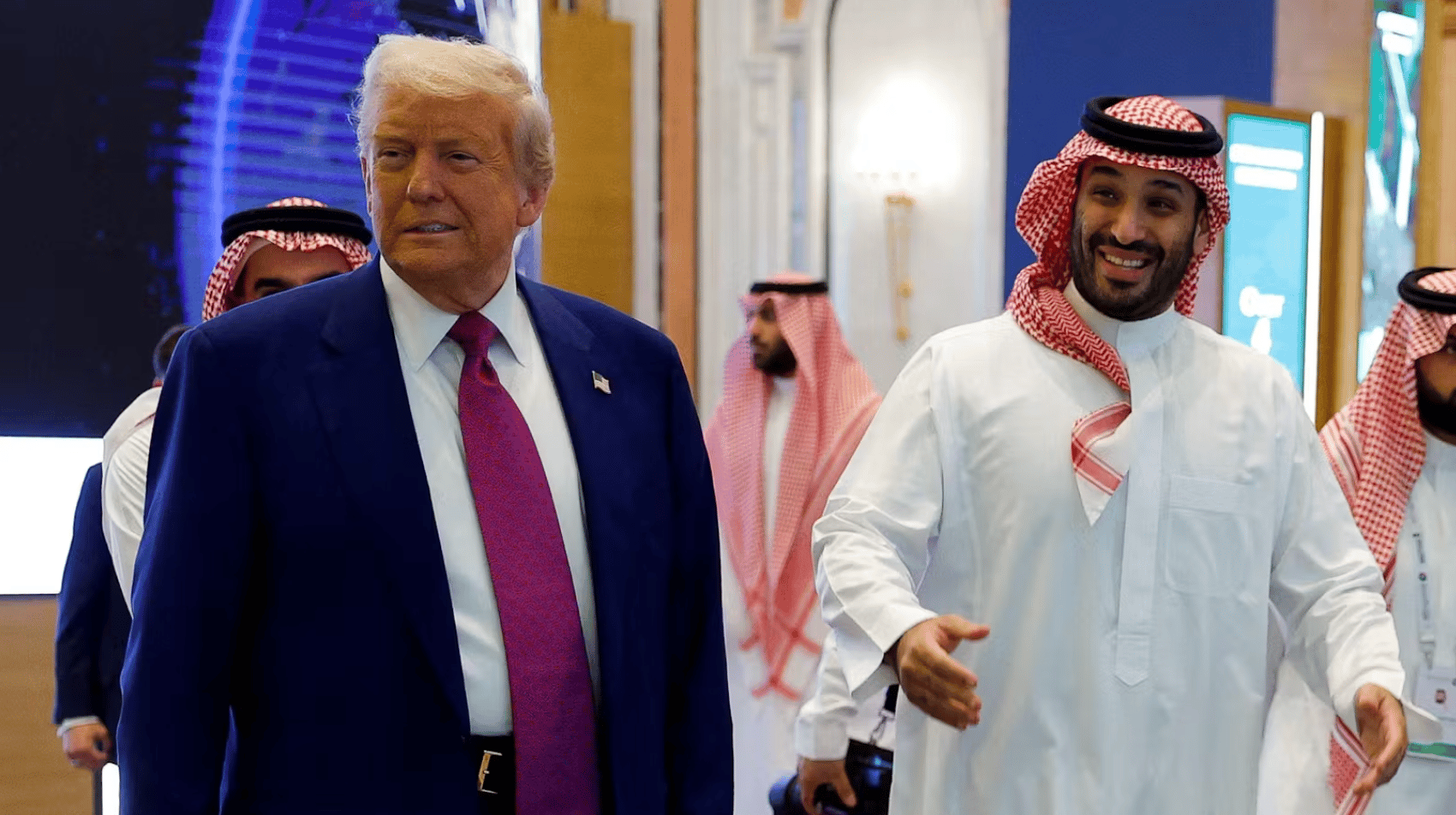
📍Saudi’s MBS to visit White House, Negotiate Defense Deal
Facts: Saudi Crown Prince Mohammed bin Salman (MBS) will visit the White House on Nov. 18 for a meeting with President Donald Trump, marking his first U.S. trip since 2018. The agenda prioritizes agreements on defense, trade, and mineral resources. This meeting expands upon the strategic economic partnership agreement signed between the two countries in May 2025 by proposing the addition of defense guarantees. Saudi Arabia is soliciting a bilateral security pact like the recent U.S.-Qatar deal, enhancing their military and intelligence ties with the U.S. to an unprecedented level. Meanwhile, the U.S. seeks normalization of Saudi-Israeli relations by expanding the Abraham Accords and reinforcing U.S. influence in the Gulf.
Analysis: The prospective defense pact has the potential to isolate Iran further while bolstering Saudi-US ties. Saudi Arabia would gain ironclad U.S. protection, but would risk alienating its populace by forging ties with Israel without the establishment of a Palestinian state. For Trump and the U.S., a defense deal contingent on Israeli normalization would be a diplomatic win. However, the U.S. should remain cautious given Saudi Arabia’s history of small-scale skirmishes with the Houthis in Yemen. Due to the nature of the proposed defense pact, these minor attacks would commit U.S. resources and troops to Saudi Arabia’s defense, potentially fueling domestic tensions.
📍Iran Joins Global Anti-Terror Financing Pact
Facts: Iran ratified a law on Oct. 22 to join the International Convention for the Suppression of the Financing of Terrorism (CFT), a United Nations convention that sets policies to prevent terrorist groups from accessing financial resources. The move is part of a larger aim to remove Iran from the Financial Action Task Force (FATF) blacklist, which monitors international money laundering and terrorist financing. Its membership on the blacklist isolated Iran from global financial markets. Iran’s president hopes the move will improve relations with Western nations, which have leveled heavy sanctions on the country for sponsoring terrorism. Iran continues to provide support to terrorist groups in the ‘Axis of Resistance,’ including Hamas and Hezbollah.
Analysis: It is unlikely that joining the CFT will successfully bring Iran in line with FATF requirements, as Tehran continues to provide financial support to terrorist groups across the Middle East. Iran ratified the law under the condition that its own constitution and laws take precedence over the U.N. treaty, effectively exempting Iran from the CFT’s core obligations. However, Iranian Principlists are concerned that joining the CFT will expose Tehran’s financial networks to adversaries and diminish Iran’s ability to project regional power. The U.S. is unlikely to view its claims of criminalizing terrorist financing as credible.
📍Russia Conducts Nuclear Forces Drills After Setbacks in U.S. Talks
Facts: On Oct. 22, Russia’s strategic nuclear forces carried out routine drills involving practice missile launches. Overseen by President Vladimir Putin, the maneuvers involved all parts of Moscow’s nuclear triad with the test-firing of intercontinental ballistic missiles and long-range cruise missiles. The Kremlin stated that these exercises were designed to test the readiness of Russian nuclear weapons systems and military command structures. The drills occurred hours after the White House cancelled plans for a meeting with Putin in Budapest. Trump cited he did not want to “waste his time,” referencing the lack of substantive progress following his August summit with Putin.
Analysis: Russia’s aggressive show of force coincides with the U.S. and E.U. challenge of Putin’s unwillingness to reach a practical resolution on the Ukraine war. With the latest round of U.S. and E.U. sanctions on Oct. 22 and 23, Western leaders have shifted their strategy to disrupting Russia’s energy sector at the expense of global oil markets. European nations are committing additional military aid towards Ukraine as a reinforcement of the country’s sovereignty against Russian military aggression. As diplomatic efforts continue to fall short, Russia, the U.S. and the E.U. are turning towards traditional tactics of military drills and punitive sanctions to gain strategic leverage in future negotiations.
📍“Brother Wang” Chinese Fentanyl Kingpin Arrested in Cuba
Facts: On Oct. 22, Cuban authorities arrested the Chinese national Zhi Dong Zhang following his escape from Mexican custody in July. U.S. authorities allege Zhi, known as “Brother Wang”, is the leader of a major Chinese criminal trafficking network with deep ties to the Sinaloa and Jalisco New Generation drug cartels. Officials claim Wang arranged the transport of fentanyl and precursor chemicals from China to multiple continents, including Mexico and onward to the United States where he led a drug organization operating across several states. After his exile and extradition to Mexico, officials confirmed Zhang will again be extradited to the U.S. where he faces indictment for laundering over $20 million through at least 100 shell companies.
Analysis: Zhang’s arrest reaffirms China’s role as a major operator in sustaining the U.S. drug market through Latin American cartels. The successes of the kingpin prior to his capture in Cuba reveals the importance of an American strategy prioritizing regional cooperation against drug supply chains. Brother Zhang’s extradition follows the U.S.’s tenth military strike against a Caribbean drug vessel on Oct. 24. With China serving as the primary supplier of precursor chemicals used to produce fentanyl, dismantling Zhi’s network disrupts the financial and logistical core of the fentanyl trade, complicating the controversy over kinetic operations targeting individual boats. As fentanyl remains the leading cause of overdose deaths in the U.S., the successful cooperation between Mexican, Cuban, and American officials underscores the effectiveness of multilateral law enforcement efforts against the suppliers of the market.
Looking Ahead
📍Nigeria’s Dangote Refinery Announces Expansion
Our View: On Sunday, Oct. 26, billionaire owner of Nigeria’s Dangote Refinery Aliko Dangote announced that the petroleum plant—Africa’s largest—will significantly expand its capacity to 1.4 million barrels of refined oil per day, surpassing India’s Jamnagar Refinery as the largest in the world. Despite being Africa’s top petroleum producer, Nigeria currently imports refined oil due to government and sectoral inefficiencies. Dangote Refinery, opened in January of 2024, significantly helped Nigeria meet domestic and foreign demand. In Dangote’s words, the development reflects, “confidence in Nigeria, in Africa, and in our capacity to shape our own energy future.”
What We’re Reading
💡North Korea unexpectedly tested short-range ballistic missiles a week before U.S. president Donald Trump, Chinese president Xi Jinping, and other world leaders gather for the APEC summit in Seoul.
💡Brazilian president Luiz Ignácio Lula da Silva and President Trump expressed optimism on future negotiations after discussing recent tensions and tariff disputes at the ASEAN summit on Sunday, Oct. 26. The U.S. placed tariffs on Brazil following the conviction of Trump’s close ally, former President Jair Bolsonaro, for his alleged attempt at a military coup.
💡Malaysia, Cambodia, Thailand, and Vietnam have informally agreed to lower tariffs on U.S. goods, regulate exports to the U.S. more closely, and invest in American enterprises in order to be exempted from U.S. tariffs.
Not a subscriber? Click here to subscribe!
See You On Thursday For 🌊The Deep Dive!🌊
This week’s newsletter brought to you by the Beyond Borders Brief staff. Connect with us on social media to pose questions, comments, or feedback. Click here to learn more about TSI.
Reply