- Stratagem
- Posts
- 🌎BBB Weekly Edition #22
🌎BBB Weekly Edition #22
Bangladesh’s Hasina Sentenced to Death in Absentia, Greece and Ukraine Sign LNG Import Deal, Polish Railroad Explosions Linked to Russian Sabotage, China Suspends Japanese Seafood Imports after PM's Taiwan Comments, Russian Spy Ship Shines Lasers at RAF in U.K. Waters, and the Reopening of Fukushima Nuclear Plant




Lucas Samuelson, Eileen Weisner, Ford Pitts, Caroline Quinones, Shivam Parti, Will Trachsel, Erin Malloy & Shardul Krishna Kumar
November 25, 2025 • Read Time: 6 minutes
What We’re Watching
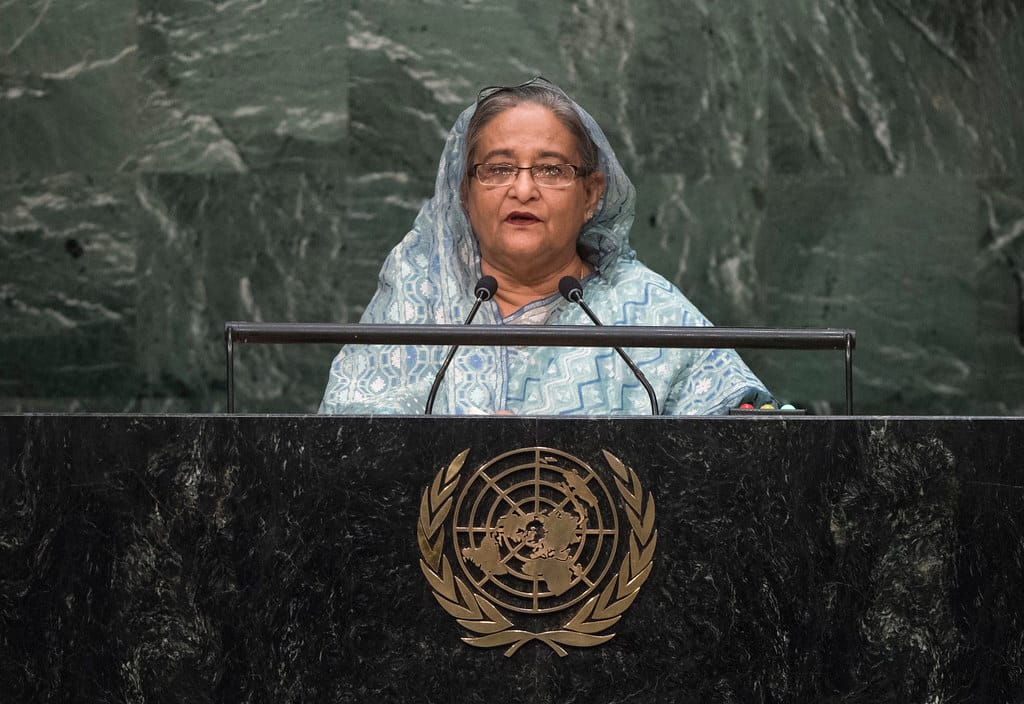
📍Bangladesh’s Hasina Sentenced to Death in Absentia, India Refuses to Extradite
Facts: On Nov. 18, Bangladesh’s International Crimes Tribunal sentenced ousted Prime Minister Sheikh Hasina to death in absentia. She was convicted of “crimes against humanity,” including ordering the use of deadly force against unarmed youth protestors in 2024, leading to at least 1,400 deaths. Former Home Minister Asaduzzaman Khan was also sentenced to death, while the ex-police chief got five years after pleading guilty. Hasina, commenting from New Delhi, called the ruling “biased.” Despite having a formal extradition treaty with Bangladesh, India refused to hand over Hasina, citing stability concerns. In the last week, Bangladesh has seen nearly 50 arson attacks, and two civilians have been killed so far as part of the unrest due to the conviction. Bangladesh Chief Adviser Muhammad Yunus hailed it as “justice.”
Analysis: Hasina’s death sentence exacerbates tensions between India and Bangladesh. Hasina has historically had deep ties with India; India sheltered the ousted PM as a young adult after her father’s assassination in 1975. As such, India is unlikely to extradite her despite the treaty. This impasse could embolden China, which has ramped up investments in Bangladesh, to exploit the rift and court Yunus’ government. Shifts in party power dynamics amidst Islamist surges could dictate the future of India-China rivalry for influence over Dhaka as Bangladesh’s February elections approach.
📍Greece and Ukraine Sign LNG Deal to Import American Oil
Facts: Ukraine and Greece signed an agreement on Nov. 16 to import American liquified natural gas (LNG) from Greece, satisfying Ukraine’s energy needs from December to March. The LNG will be transported via the developing ‘Vertical Corridor’ pipeline system and aims to offer an alternative energy source for Europe and compensate for wartime losses in Ukrainian gas production. Earlier this month, Greek and American officials announced a 20-year LNG trade agreement routing U.S. oil through Greece to Central and Eastern Europe. The deal makes Greece the first European country to actively participate in the EU’s goal to replace all Russian gas by 2027. U.S. Energy Secretary Chris Wright emphasized the importance of cutting off the flow of revenue for Russia’s war operations in Ukraine by reducing European dependence.
Analysis: The agreement between Kyiv and Athens will bolster Greece’s position as an energy hub in Europe and offer Ukraine a stable energy supply as it prepares for winter. Washington’s long-term LNG deal with Athens is poised to strengthen its trade relations with Europe and capitalize on the EU’s commitment to reduce its energy reliance on Russia. Greece’s emergence as a stable energy hub will undermine Russia’s economic leverage over the West and enhance Ukraine’s energy security while benefitting the U.S. economy. The U.S. is positioned to strategically develop the ‘Vertical Corridor’ as a favorable alternative to the Central Asian ‘Middle Corridor,’ a route that bypasses Russia but offers less economic benefits for the U.S.
📍Polish Railroad Explosion Declared as Russian ‘Act of Sabotage’
Facts: On Nov. 15, an explosion destroyed the tracks of a key railway line in southeastern Poland. Polish Prime Minister Donald Tusk immediately declared the event an unprecedented act of sabotage, citing additional damage found at other sections of the same rail line and at least two other incidents that risked train crashes. The explosion occurred on a track connecting the nation’s capital, Warsaw, to Lublin, a route crucial for aid delivery to Ukraine. On Nov. 18, Polish officials accused two Ukrainian citizens of working directly with Russia to conduct the attack. NATO officials announced they will wait for the outcome of the investigation but remained on high alert as Kremlin spokesperson Dmitri Peskov rebuked allegations that Moscow engineered the attacks.
Analysis: Poland’s rail damage exposes the vulnerability of NATO’s critical infrastructure, highlighting the need for a stronger response from the West against Russian hybrid warfare. Russian-linked sabotage operations have tripled from 2023 to 2024. With three separate rail incidents occurring over the same weekend, the trend suggests a sustained Kremlin effort aimed at destabilizing a frontline NATO state and its efforts to support Ukraine. While Europe bears the immediate damage, Russian operations in Poland directly test U.S. security commitments in the region at a time when negotiations in Ukraine appear to be empowering Moscow’s voice. Failing to formulate a clear response now risks inviting even bolder subversion and the potential of a far costlier crisis for the United States to contain.
📍China Suspends Imports of Japanese Seafood after PM’s Taiwan Comments
Facts: On Wednesday, Nov 19, China imposed a ban on imports of Japanese seafood just three months after it lifted a previous ban over Japan’s release of wastewater from the damaged Fukushima water plant. While Chinese officials cited the need for further monitoring, news of the suspension arrived after Japanese Prime Minister Takaichi noted to the Japanese parliament earlier in the month that the country could become militarily involved in the scenario of a Chinese attack on Taiwan. While Takaichi framed it as a question of defending Japan’s existence, Beijing repeatedly demanded she retract her comments and accused Takaichi of advocating for “revived Japan prewar militarism.”
Analysis: The reimposition of a ban on Japanese imports marks a significant downturn in diplomatic relations between Beijing and Tokyo after a brief honeymoon period for the newly-elected PM Takaichi. From military drills in disputed waters to travel warnings to students, tourists, and employees, China is leveraging political, economic, and social levers in an effort to hold Japan’s leader accountable for her comments. Takaichi has not shied away from her controversial views over Japan’s culture and military history, with her anti-immigrant and anti-tourism stances risking diplomatic friction with other countries. Takaichi’s hawkish views on Beijing may indicate a growing willingness among Taiwan’s regional allies to overtly support the country’s sovereignty.
📍Russian Spy Ship Shines Lasers at RAF Plane in U.K. Waters
Facts: On Nov. 19, British Defense Secretary John Healey announced that a Russian naval ship flashed lasers at British military aircraft to disrupt their surveillance flight. The UK deployed the aircraft to monitor the spy ship – the Yantar – which was lingering 12 nautical miles north of Scotland at the edge of the U.K.'s territorial waters, well within the U.K.'s exclusive economic zone of 200 nautical miles. The Yantar is an oceanic research vessel that Western leaders believe is part of a spy fleet that conducts surveillance and sabotage operations of undersea cables and pipelines. Secretary Healey took an assertive stance, saying that “if the Yantar travels south this week, we are ready.” He also updated the navy’s rules of engagement to increase monitoring near British waters.
Analysis: The Yantar’s presence in British waters poses a sinister threat to the U.K.'s communications, energy, and internet systems due to its potential surveillance of cable systems. Although the laser interference fell short of blinding the pilots, the move was a bold affront that fits into a broader trend of Russian provocation across Europe. Through its incursions into NATO airspace and sabotage operations in Poland, Russia has probed NATO military preparedness and signalled its own aggravated stance. The Defense Secretary’s reaction demonstrates the necessity of forceful responses to deter further escalations of Russian aggression against NATO countries and their allies.
📍Fukushima Nuclear Plant Set to Reopen
Facts: Hideyo Hanazumi, the governor of Japan’s Niigata Prefecture, is set to approve the restart of the Kashiwazaki-Kariwa nuclear plant by the end of November. The plant, which has been closed since the 2011 Fukushima Disaster, is the world’s largest. Its reopening will significantly boost electricity access and power supply throughout eastern Japan, and improve economic opportunities for those in the region. The upcoming approval aligns with current Prime Minister Sanae Taikachi’s goals to improve energy security and increase nuclear development in Japan.
Analysis: The desire to re-open Kashiwazaki-Kariwa sends an important message of rehabilitation and progress to the rest of the world, especially coming from a nation that suffered one of the worst nuclear disasters in history. Although few and far between, nuclear accidents have dissuaded countries from pursuing the energy source. Over the last decade, the US has retired nuclear reactors across the nation as part of a long-term decommissioning plan. Japan’s steps may encourage the US to do the same, reducing fears while demonstrating the efficacy of nuclear power. Recent plans by the White House to re-open the Three Mile Island plant suggest that the US is already on the path towards reinvesting into nuclear energy for long run cost and climate benefits.
Looking Ahead
📍Musks’ xAI Announces Saudi Data Center Development
Our View: Elon Musk’s xAI announced a new data center with a 500-megawatt capacity—making it among the largest in the world—to be constructed in the Kingdom of Saudi Arabia in partnership with Saudi AI company HUMAIN and powered by Nvidia’s computing chips. As part of the agreement, xAI’s Grok model will be institutionally deployed across the Kingdom and integrated into HUMAIN’s agent platform. The location of the data center has not yet been made public, nor has the date when construction will begin. This news comes just one day after the US and Saudi Arabia announced their AI Memorandum of Understanding, a signal of a deepening US-Saudi partnership.
What We’re Reading
💡The Trump administration formally designated the Cartel de los Soles as a foreign terrorist organization, a group which the White House claims is overseen by Venezuelan president Nicolás Maduro.
💡Colombian President Gustavo Petro is facing accusations of treason after an investigation revealed the alleged dissemination of classified military intelligence to FARC dissidents.
💡After a call from Chinese leader Xi Jinping on Monday on a wide range of topics, President Donald Trump touts an “extremely strong” relationship between the US and China.

🚗One For The Road🚗
Happy Thanksgiving!
Not a subscriber? Click here to subscribe!
See You On Thursday For 🌊The Deep Dive!🌊
This week’s newsletter brought to you by the Beyond Borders Brief staff. Connect with us on social media to pose questions, comments, or feedback. Click here to learn more about TSI.
Reply