- Stratagem
- Posts
- 🌎BBB Weekly Edition #23🌎
🌎BBB Weekly Edition #23🌎
Ukraine Targets Russian Shadow Fleet with Drone Attacks, New Delhi Talks Strengthen India-Russia Relationship, U.S. and Indian Authorities Clash Over Air India Crash, U.K. and Norway Ink Naval Defense Agreement, Leader of Anti-Hamas Militia Killed in Southern Gaza, and a Failed Coup in Benin




Lucas Samuelson, Eileen Weisner, Ford Pitts, Caroline Quinones, Shivam Parti, Erin Malloy & Shardul Krishna Kumar
December 09, 2025 • Read Time: 6 minutes
What We’re Watching
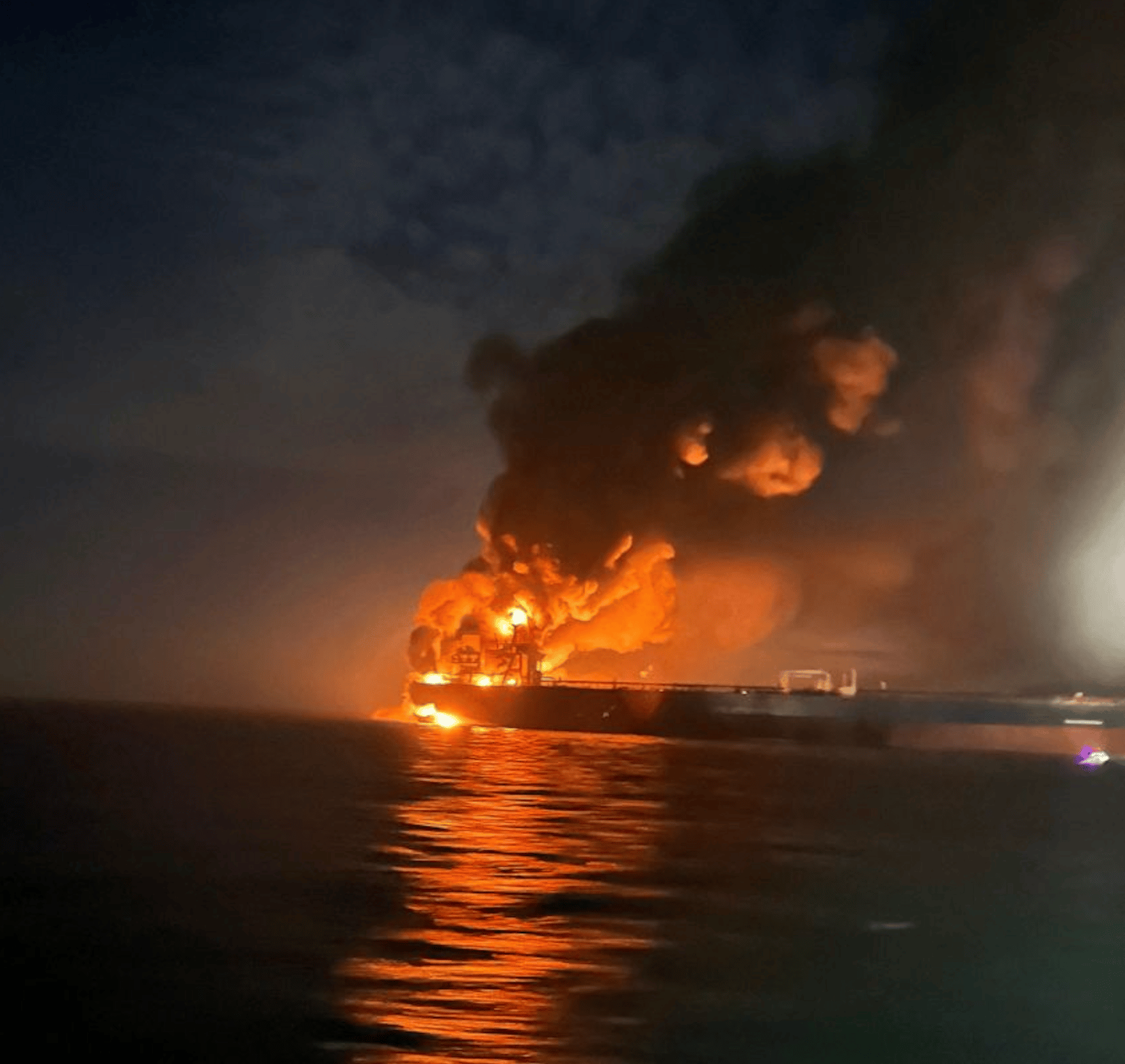
📍Russian Tanker Struck by Unidentified Drone off Turkiye as Ukraine Targets ‘Shadow Fleet”
Facts: On Dec. 2, an unidentified kamikaze drone attacked the Russian-owned oil tanker Midvolga-2 in the Black Sea, roughly 80 miles off the Turkish coast. A Ukrainian defense news outlet reported that imagery of the damage resembles the capabilities of Ukraine-produced ‘deepstrike’ drones. This incident was the third such attack on Russian-linked ships within a three-day span. Although Kyiv denied striking the Midvolga-2, the ship's parent company is currently facing Ukrainian sanctions for transporting Russian oil. Ukrainian officials did confirm its naval drones carried out the previous two attacks, all of which occurred as U.S. officials met with Russian President Vladimir Putin for negotiations on ending the war.
Analysis: The timing of the attacks coincides with major U.S.-Russia peace talks and situates Kyiv and Washington on opposite sides of future strategy regarding the conflict. As U.S. officials continue to explore diplomatic offramps, the strikes signal that Ukraine has no intention of easing military pressure against Russia’s “shadow fleet.” By potentially striking three Russian-linked vessels over the span of days, Ukraine is asserting its willingness to escalate the war effort regardless of U.S. diplomatic interests. This divergence presents a crucial crossroads for Washington and Kyiv that will determine the war’s trajectory.
📍Putin and Modi Strengthen India-Russia Relationship after New Delhi Talks
Facts: On Dec. 4, Russian President Vladimir Putin received a warm welcome from Indian Prime Minister Narendra Modi at the New Delhi airport, marking his first visit to the country since Russia’s invasion of Ukraine. Following talks on Friday, the leaders announced the finalization of an economic cooperation program to increase annual trade between the two countries from its current level of $68.7 billion to $100 billion by 2030. Putin said Russia has begun work on an agreement with India to establish a free trade zone with the Eurasian Economic Union, a Moscow-centered forum of multiple ex-Soviet nations. Additionally, President Modi expressed that the countries will continue building upon their decades of civil nuclear cooperation to further strengthen energy ties.
Analysis: Modi’s unusual diplomatic reception of Putin signals public defiance of the Trump administration despite facing months of punitive tariffs and diplomatic pressure over its purchases of Russian oil. While the summit did not yield any definitive deals on defense or importing discounted Russian crude oil, both leaders narrowed in on trade as the priority focus. Increasing access to each others’ markets is crucial to bolstering their respective economies. However, in the context of persistent Western pressure, Prime Minister Modi still faces the challenge of protecting India’s energy independence while simultaneously pursuing a trade deal with the U.S.
📍U.S., India Authorities Clash Over Air India Crash
Facts: On June 12, an Air India Boeing 787 crashed in Ahmedabad, India, killing 260. The ongoing investigation is marred by procedural conflict between the U.S.’ National Transportation Safety Board (NTSB) and India’s Aircraft Accident Investigation Bureau (AAIB). The U.S. accuses India of unusual investigative practices, claiming that New Delhi has not prioritized data collection while also inhibiting American investigators from doing so. NTSB Chair Jennifer Homendy threatened to end American involvement in the investigation amid frustrations with Indian regulators. The AAIB’s report states that the aircraft’s fuel control switches starved the engines, leading to the crash. However, separate reports indicate that U.S. experts privately believe deliberate pilot action led to the disaster, a theory India has avoided discussing.
Analysis: The intense disagreement over the causes of the Air India crash is not only a result of a detailed investigation, but also a clear pursuit of political and commercial convenience. By focusing on deliberate pilot action, the U.S. narrative safeguards Boeing’s global reputation and the integrity of the 787, a key American export. This defense is vital to secure future high-value trade deals. Conversely, India’s reluctance to acknowledge culpability reflects its political interest in protecting the national flag carrier and asserting its investigative sovereignty. This procedural "slow-rolling" and restricted U.S. access prove that India views the crash as a domestic matter, deflecting U.S. pressure in the interest of upholding national prestige.
📍U.K. and Norway Sign Major Naval Defense Agreement to Counter Russian Spy Ships
Facts: On Dec. 4, the U.K. and Norway announced a new defense agreement to combat Russian naval operations in the North Atlantic. The agreement establishes a combined fleet of at least 13 anti-submarine frigates with the mission of "hunting" Russian seacraft to protect undersea infrastructure. The pact also extends to joint training, wargaming, and arms transfers, including Norwegian long-range strike missiles and British torpedoes. The agreement follows a 30% increase in Russian vessels spotted in U.K. waters over the last two years, including an incident just weeks ago when a Russian spy ship flashed lasers at RAF pilots off the coast of Scotland in an attempt to disrupt tracking efforts.
Analysis: British undersea cables and pipelines are critical for civilian and military communications, internet connectivity, and energy security. By increasing patrols in the North Atlantic, the joint fleet will deter Russian surveillance operations, complicating Moscow's intelligence gathering capabilities and attempts to attack undersea critical infrastructure. More broadly, the defense agreement marks a strong response to the recent surge in Russian incursions into NATO territories, such as the violation of Estonian airspace in September. The U.K. and Norway have set a concrete example of the actions necessary to defend forms of critical infrastructure that, until recently, have been rarely exploited.
📍Leader of Anti-Hamas Militia Killed in Southern Gaza, Cause Remains Unknown
Facts: Yasser Abu Shabab, the leader of the anti-Hamas Popular Forces militia, was killed on Dec. 4 in southern Gaza. The Popular Forces, which is backed by Israel, operates within Gaza near the city of Rafah. Israel had hoped to use the group’s influence to lead reconstruction efforts in Gaza as the next phase of the ceasefire approaches. The exact reason for his killing is still unknown, though an official statement from the Popular Forces stated that he was shot while attempting to break up a family conflict. Hamas, while not claiming responsibility for Abu Shabab’s death, stated that he met “the inevitable fate of anyone who betrays their people and homeland, agreeing to be a pawn for the Occupation.”
Analysis: Shabab’s death threatens the future of the fragile ceasefire deal, which stipulates the disarmament of Hamas. Since the disarmament has yet to occur, the death of a major opposition leader means that Hamas’ power in Gaza faces less internal resistance. For Israel, it suggests the continuation of a war that many of its citizens want to conclude. Any escalation of the conflict inevitably involves the U.S., which negotiated the ceasefire deal, and has supported Israel with arms and aid throughout the war. If peace does hold, Abu Shabab’s death will nonetheless complicate cooperation between a future Palestinian government and Israel.
📍Benin Armed Forces Foil Attempted Coup
Facts: On Dec. 7, a group of rebel soldiers in Benin identifying themselves as the Military Committee for Refoundation announced that they had successfully conducted a military coup. On national television, the coup leaders claimed they had removed Beninese President Patrice Talon from office and dissolved the government. However, later the same day, the Beninese Armed Forces announced that they had foiled the coup, with government officials insisting that the country remained completely secure. The Economic Community of West African States (ECOWAS) condemned the takeover as “unconstitutional” and pledged to support the government by deploying its regional standby force drawn from Nigeria, Ghana, Côte d’Ivoire and Sierra Leone. President Talon later delivered a broadcasted speech that confirmed the defeat of the co-called Military Committee for Refoundation.
Analysis: The coup attempt reflects a recent pattern of military uprisings amid increased democratic backsliding and political unrest across West Africa. It comes just months ahead of Benin’s presidential election in April 2026 with widespread discontent over Talon’s recent policies. Growing economic inequality and mounting distrust in democratic processes, especially following a recent constitutional change that increased the presidential term from five to seven years, undermines the Beninese government’s attempts to project an image of control and security. As the U.S. prioritizes its strategic partnership with Benin in order to rebalance its security presence and economic influence in the region, the threat to democratic institutions in West Africa places increased pressure on Washington to preserve the region’s fragile democracies.
Looking Ahead
📍U.S. Exports Cloned Iranian Drones to Middle East
Our View: In an effort to field affordable drone technology, U.S. Central Command has launched Task Force Scorpion Strike, a squadron of low-cost unmanned combat drones with extensive range and autonomous operation capabilities to be based in the Middle East. The single-use drones strongly resemble the Iranian Shahed-136, which has often been used against U.S. allies and forces in the region, as well as by Russia in the ongoing Russo-Ukraine War. According to a U.S. defense official, CENTCOM’s focus on expensive advanced drone systems such as the $30 million MQ-9 Reaper has, in the past, “put our forces at a disadvantage” against cheaper systems like the $35,000 Shahed. The U.S. investment in this low-cost drone fleet highlights a shift to cheaper, higher volume drone platforms and a willingness to draw lessons from recent conflicts to prepare for future warfare.
What We’re Reading
💡Fresh clashes have erupted between Thailand and Cambodia in what is the most serious conflict since the ceasefire brokered in July. Since May, escalating tensions between the two countries have led to more than 40 deaths.
💡On Dec. 4, at a meeting in Washington hosted by President Donald Trump, leaders of Rwanda and Democratic Republic of the Congo (DRC) signed a peace deal to end their conflict that began in 2022. However, fighting broke out in the DRC the following day, with each side blaming the other for the outbreak of hostilities.
💡European countries are reportedly considering the “nuclear option” of liquidating $2.34 trillion in U.S. assets should President Trump abandon Ukraine in peace negotiations. This news comes during heightened concerns among European officials that the Trump administration would prioritize American economic advantage over Europe’s safety.

Thank you for reading BBB this semester!
Not a subscriber? Click here to subscribe!
See You On Thursday For The Deep Dive!
This week’s newsletter brought to you by the Beyond Borders Brief staff. Connect with us on social media to pose questions, comments, or feedback. Click here to learn more about TSI.
Reply